Retail Design in Melbourne: Turning Vision into Real-World Performance
In retail, design isn’t just about how a store looks. It’s about how it performs.
And in today’s market, where margins are tighter, customer expectations are higher, and competition is constant, retail design needs to do more than create visual impact. It needs to support how the business operates. That’s where the difference lies.
Design That Goes Beyond Aesthetics
Too often, retail design is treated as a creative exercise alone. But the most successful environments are built on something deeper: a balance between brand expression and real-world functionality.
At its best, retail design should:
- Reflect your brand clearly and consistently
- Guide customer movement and improve flow
- Support staff efficiency and day-to-day operations
- Adapt to future formats and evolving retail trends
Because a space that looks good but doesn’t work will quickly show its weaknesses.
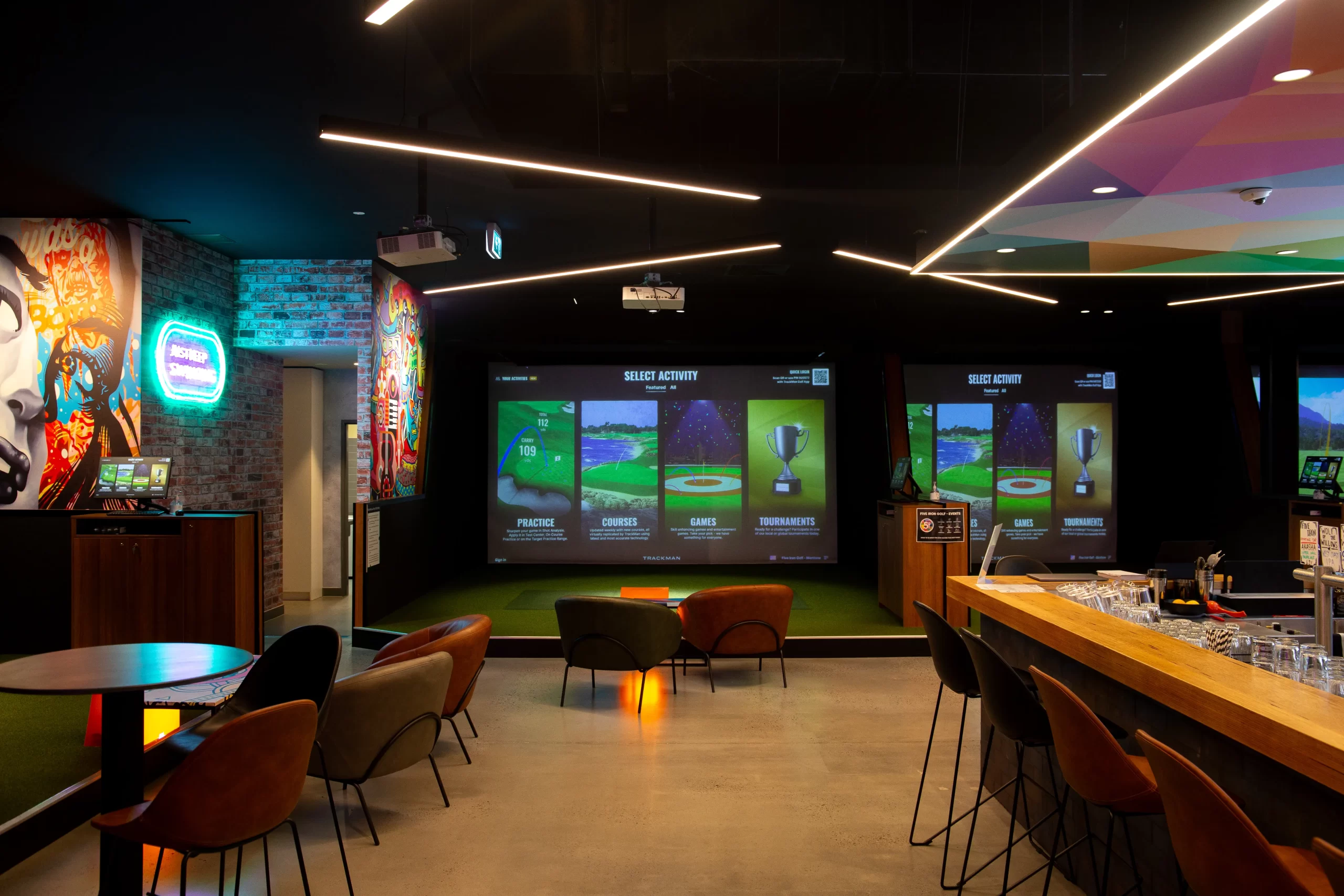
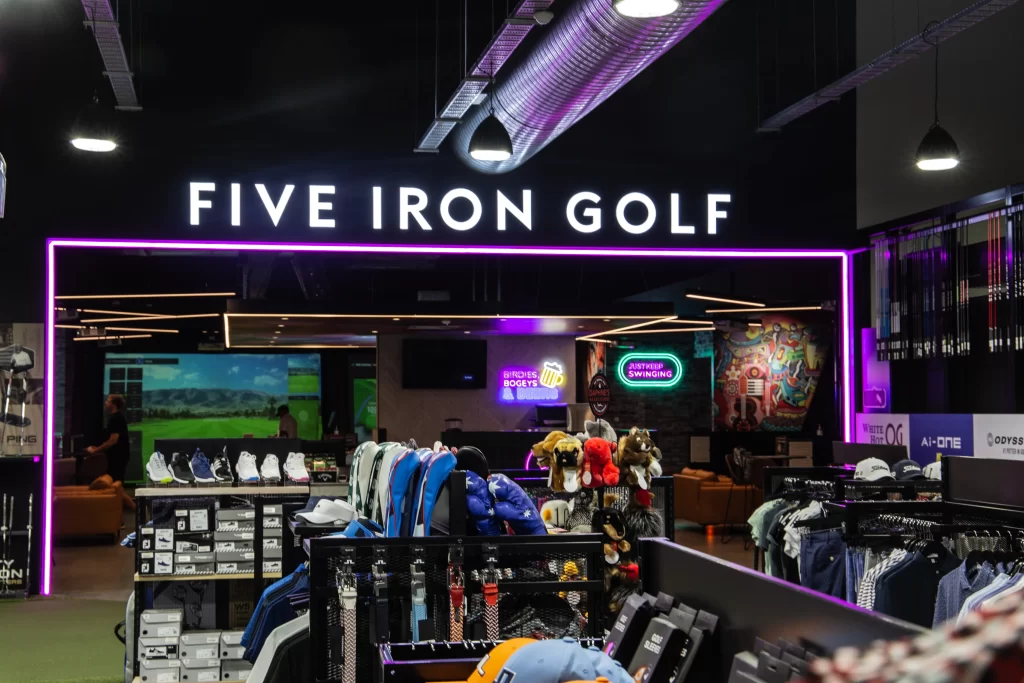
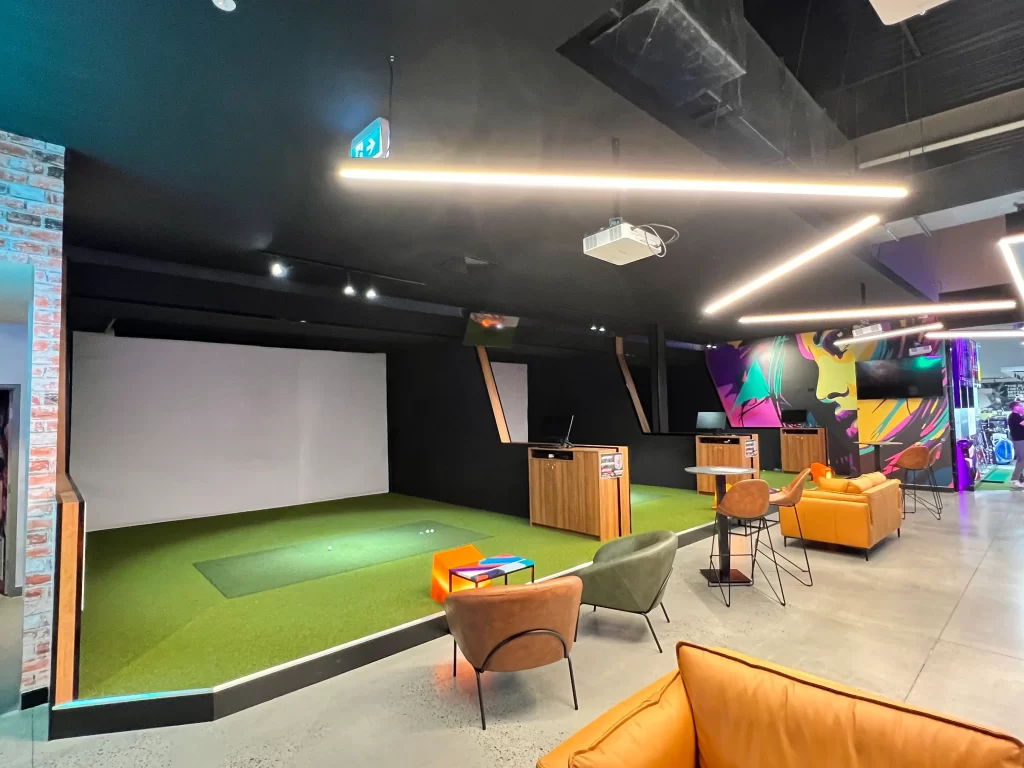
This becomes even more critical in experiential environments. In the delivery of Five Iron Golf’s first Australian venues, the challenge wasn’t just recreating a global brand aesthetic; it was ensuring the space supported a hybrid model of hospitality, entertainment, and high customer turnover.
The design had to perform operationally, not just visually.
From Concept to Reality. Without the Disconnect.
One of the biggest risks in retail and hospitality projects is the gap between design intent and delivery.
Concepts can look impressive on paper or in renders, but if they don’t translate effectively into construction, they create cost overruns, delays, and compromises on site.
An integrated approach removes that risk. By aligning design, documentation, and delivery early, retailers gain:
- Clear visibility on feasibility and cost
- Better decision-making through 3D modelling and planning
- Smoother approvals and build processes
- Greater confidence that what’s designed is what gets delivered
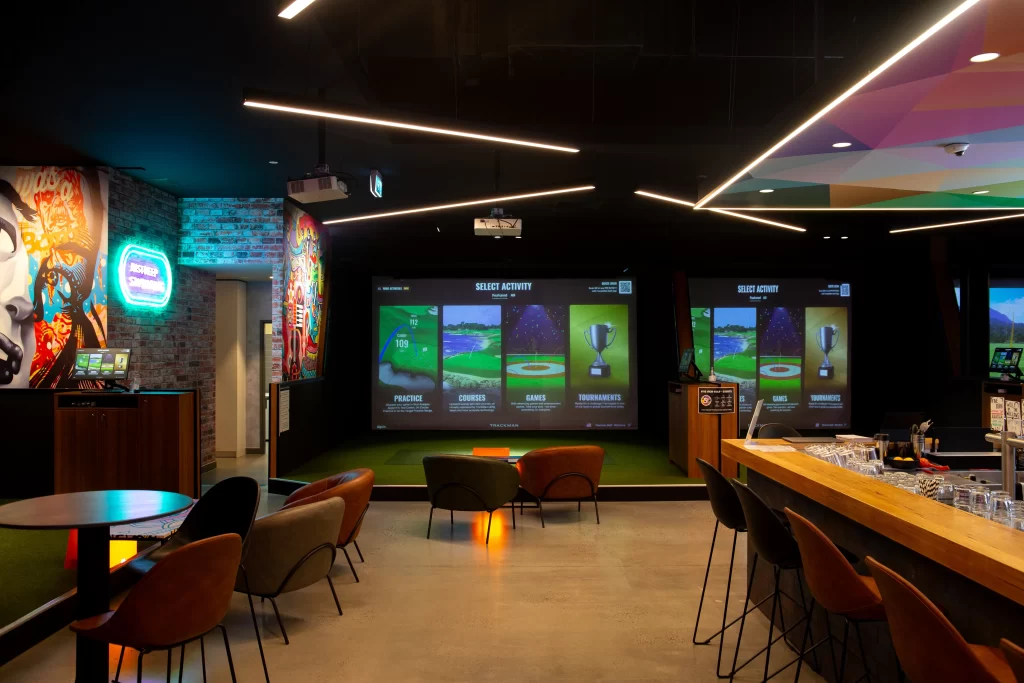
On the Five Iron Golf project, this meant working closely with an international design team to translate a US-based concept into an Australian-built outcome.
Through early feasibility studies and detailed documentation, we maintained the global design intent while adapting to local regulations and materials. This resulted in a visually appealing design that could be built efficiently and consistently at two sites.
This is where design becomes commercially valuable, not just visually appealing.
Designing for the Way Retail Actually Operates
Every retail or hospitality environment has its own operational realities. From high-volume hardware stores to pharmacy environments and fashion retail, the way a store functions day-to-day should shape the design from the beginning.
That includes:
- Product or service flow and accessibility
- Customer journey and dwell zones
- Integration of fixtures, branding, and technology
- Security and supervision within the layout
For Five Iron Golf, this meant designing for a layered experience:
- Active zones with simulator bays
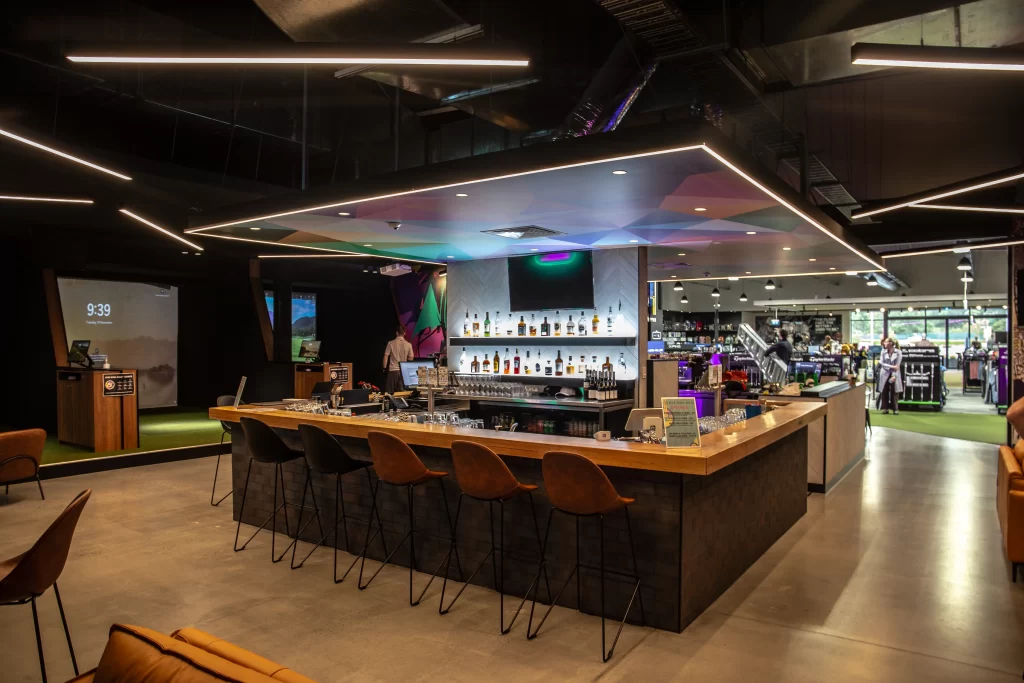
- Social and hospitality areas
- Seamless movement between play, service, and seating
All elements needed to work together, allowing customers to move seamlessly through the space while staff operated efficiently in a high-energy environment.
When these elements are considered early, the result is a space that performs under pressure, not just on opening day.
Future-Focused Retail Environments
Retail and hospitality are constantly evolving. Formats change. Customer expectations shift. Technology becomes more integrated. Experiences become more important.
The challenge isn’t just designing for today; it’s designing for what comes next.
Experienced designers understand how to:
- Replicate scalable formats across multiple locations
- Maintain consistency across different sites
- Build flexibility into layouts and fixtures
- Future-proof spaces for changing product mixes or customer behaviour
The Five Iron Golf rollout is a strong example of this thinking. Delivering two venues simultaneously wasn’t just about opening doors; it was about establishing a repeatable model for future expansion in Australia.
Because the most valuable retail environments are the ones that continue to perform over time, not just at launch.
The Value of Getting It Right Early
The earlier the design is aligned with real-world outcomes, the smoother the entire project becomes.
Better design decisions upfront lead to:
- Fewer variations during construction
- Reduced delays and rework
- Stronger alignment between brand, budget, and buildability
- A better-performing space from day one
A Partner in the Process
Retail and hospitality design works best when it’s collaborative.
Whether it’s a new store, a flagship venue, or a multi-site rollout, the goal is the same: turning a vision into a space that delivers commercially, operationally, and experientially.
At Associated Projects, that means combining creative thinking with practical delivery, so the end result isn’t just a concept, but a working retail environment that supports long-term success.
Start the Conversation
If you’re planning a new store, venue, or rollout, it’s worth stepping back and asking a simple question: Is your store designed to look good, or to perform?
Because in today’s market, it needs to do both.