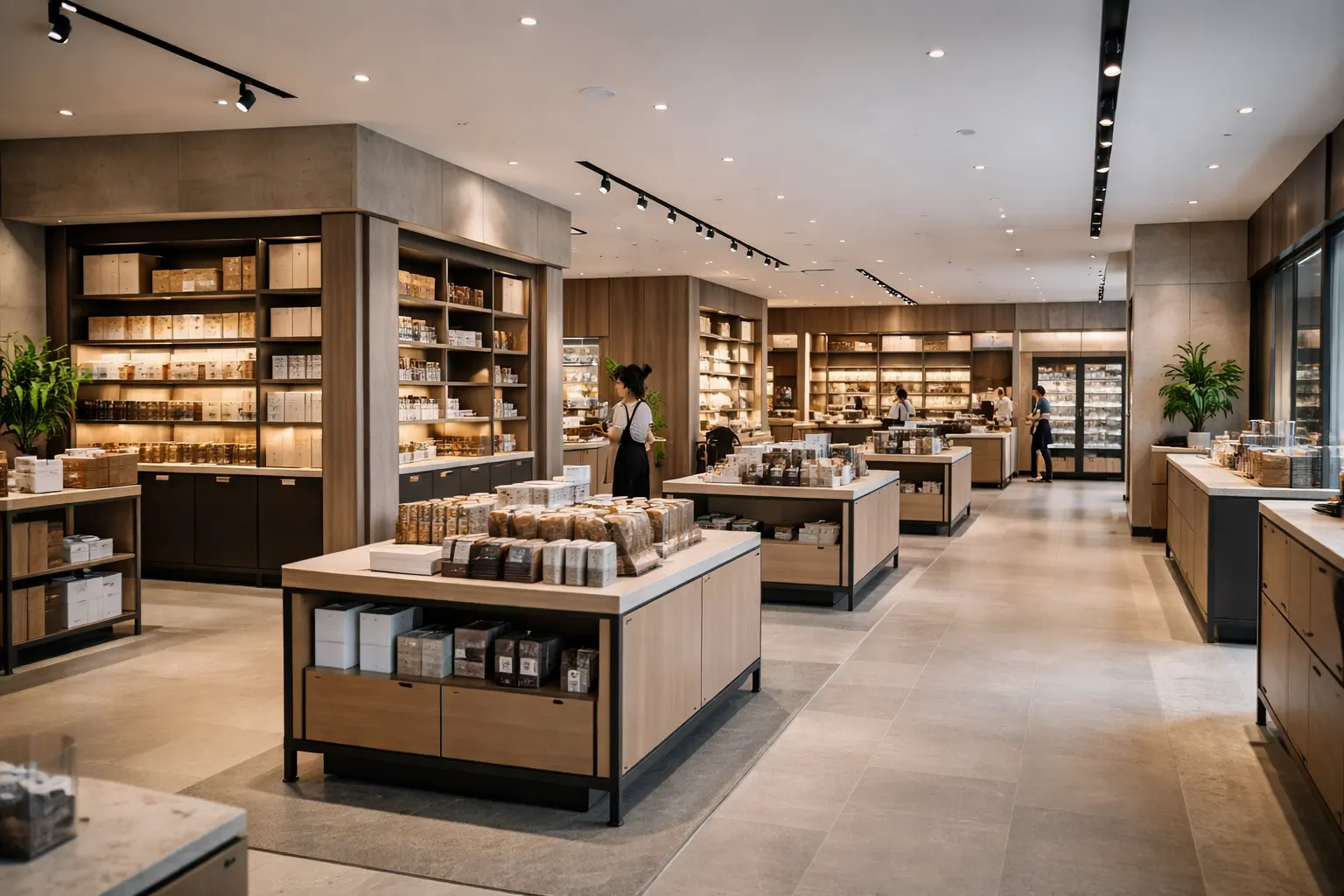
Profitability Is the Strategy: Why Smarter Environments Matter More in a Tough Market
For a long time, growth was the headline.
Open more sites. Expand faster. Increase presence.
But in a tougher market, that thinking changes.
Because growth only works if it holds up commercially.
That puts sharper focus on something many businesses underestimate: the role of the physical environment in performance.
The shift from expansion to performance
Across sectors, rising costs, tighter margins and more cautious investment are forcing a reset.
Businesses are asking better questions:
- How quickly can a site become productive?
- How efficiently can it operate?
- How durable is the investment?
- How easily can the model be repeated?
Those questions matter in franchise and multi-site settings, but they are not limited to them. The broader issue is the same: the environment has to support performance, not just presence.
Where profitability is really won or lost
A lot of value is determined before the doors open.
Decisions around layout, materials, build methodology, fixtures, services coordination and the right level of standardisation can all shape long-term commercial performance.
Done well, those decisions can:
- reduce upfront capital strain
- improve staff efficiency
- streamline operations
- extend lifecycle durability
- support a more consistent customer experience
Done poorly, they can:
- inflate costs
- introduce friction
- create unnecessary complexity
- erode margins over time
- make rollout harder to manage
And those issues compound, especially across multiple sites.
The misconception about cost
There is a common trap in tougher markets: cutting costs without improving thinking.
The goal is not to spend less at all costs.
The goal is to spend more intelligently.
That means:
- designing for buildability
- standardising where it matters
- reducing avoidable complexity
- aligning design decisions with operational reality
- making material and construction choices that hold up over time
The result is not simply a cheaper project.
It is a stronger commercial outcome.
Why smarter environments support better economics
A smarter environment does not start with aesthetics alone. It starts with understanding how the site needs to function once it is live.
That includes:
- how staff move and work within the space
- how customers navigate and engage
- how the environment supports service delivery
- how durable the materials and built elements need to be
- how consistently the model can be rolled out across locations
When these decisions are aligned early, the environment becomes more resilient. It becomes easier to operate, easier to repeat and easier to defend commercially.
That matters even more when conditions are tight.
Because in those moments, profitability is not a by-product of growth.
It becomes the strategy itself.
The bigger takeaway
Businesses do not improve performance by treating the environment as a cosmetic layer.
They improve performance by treating it as a commercial system.
When design, planning, construction methodology, materials and delivery are aligned, the result is a space that works harder over time.
That creates a stronger brand, a better customer experience and a healthier commercial result.
In tougher conditions, that is not optional.
It is one of the clearest ways to protect margin and improve long-term performance.
CTA
Heading: Is your environment helping performance — or quietly adding cost?
Body: If you are planning a new site, refurbishment or rollout, Associated Projects can help you make smarter decisions earlier so the environment works harder commercially.
Internal Links
- /services
- /design-construct
- /early-contractor-involvement
- /fit-out-services
- Tarocash project page
- Hardy & Harper project page
Attribution
This article was originally developed by Associated Projects for BDC distribution and has been adapted here for the Associated Projects website.